The Amazing Good News of Ezekiel 11.16
A Lenten Sermon on Ezekiel chapters 8 to 11: When Special People are Good at Form over Function

Form over Function
I remember seeing a Christian evangelism video (not pictured above) years ago, where the producers obviously wanted to spice up the visuals by showing their talking head climbing some rugged terrain. The costume department threw some new Chelsea boots on him and some pristine outerwear, and the cinematographer captured some nice panoramic shots. While he was climbing around, he was teaching about something. But I can't remember his content because during the whole scene my mind was screaming: "Those Chelsea boots are so inappropriate! And you obviously have never worn those clothes before!"
We humans can easily be all Form without any Function. We can be like construction workers who show up at the right job site, at the right time, with the right job orders, and with perhaps all the right tools and supplies. But if we fail to build the right things in the right way, none of it matters.
Just because someone comes to church, doesn’t mean they’re worshipping God. Just because we dress right, and go to the right places, with all the right people, and sing and pray and read and hear all the right words — all that doesn’t mean anything if we’re not actually doing what Jesus wants.
Evil in the Temple
“walls covered with engravings of all kinds of crawling animals and detestable creatures . . . there were about twenty-five men with their backs to the sanctuary of Yahweh. They were facing east, bowing low to the ground, worshiping the sun!”
—Ezekiel 8.10 & 16
“so that you do not ruin yourselves and make for yourselves a divine image in a form of any image, a replica of male or female, a replica of any animal that is upon the earth, a replica of any winged bird that flies in the air, a replica of any creeping thing on the ground, a replica of any fish that is in the water below the earth . . . do not lift your eyes toward heaven and observe the sun and the moon and the stars, all the host of the heaven, and be led astray and bow down to them and serve them”
—Deuteronomy 4.16–19
In the late-stage empire that Ezekiel describes, he’s seeing the prophecies of Moses come to life. Imagine: Pagan worship of the sun from the steps of the temple!
In Ezekiel chapters 8–11, Yahweh had to clear the Temple and the Holy Land . . . just like Jesus has to clear the Temple: The religious oligarchs let their favored religious entrepreneurs into the sacred house so that they could make money selling the kosher merchandise that the masses wanted. And it all has to be cleared out to make room for the downtrodden who simply wanted to seek the face of the God who loves and blesses the least and the left-out.
So, Jesus offers himself to his special people. But they fail again to recognize what's on offer. And so God once again has to clear out the Temple and the Holy Land in 70 AD. Three times the Temple is desecrated; three times God has to clear it out.
Causing Death
Then he said to me, “The sins of the people of Israel and Judah are very, very great.”
—Ezekiel 9.9
In Ezekiel 9 we find out that Jerusalem had 6 angelic guards stationed at the North Gate. And Ezekiel notes that there’s a 7th person in linen.
Around 400 years after Ezekiel and 160 years before King Jesus was born, a Jewish prophecy talked about this linen-man as a messianic figure:
“when the Messiah of Aaron and Israel comes. It will be as it was in the time of the first visitation, as He said by the hand of Ezekiel: ‘to make a mark upon the foreheads of those who sigh and groan.’”
—Damascus Document, dates to c.160 BCE
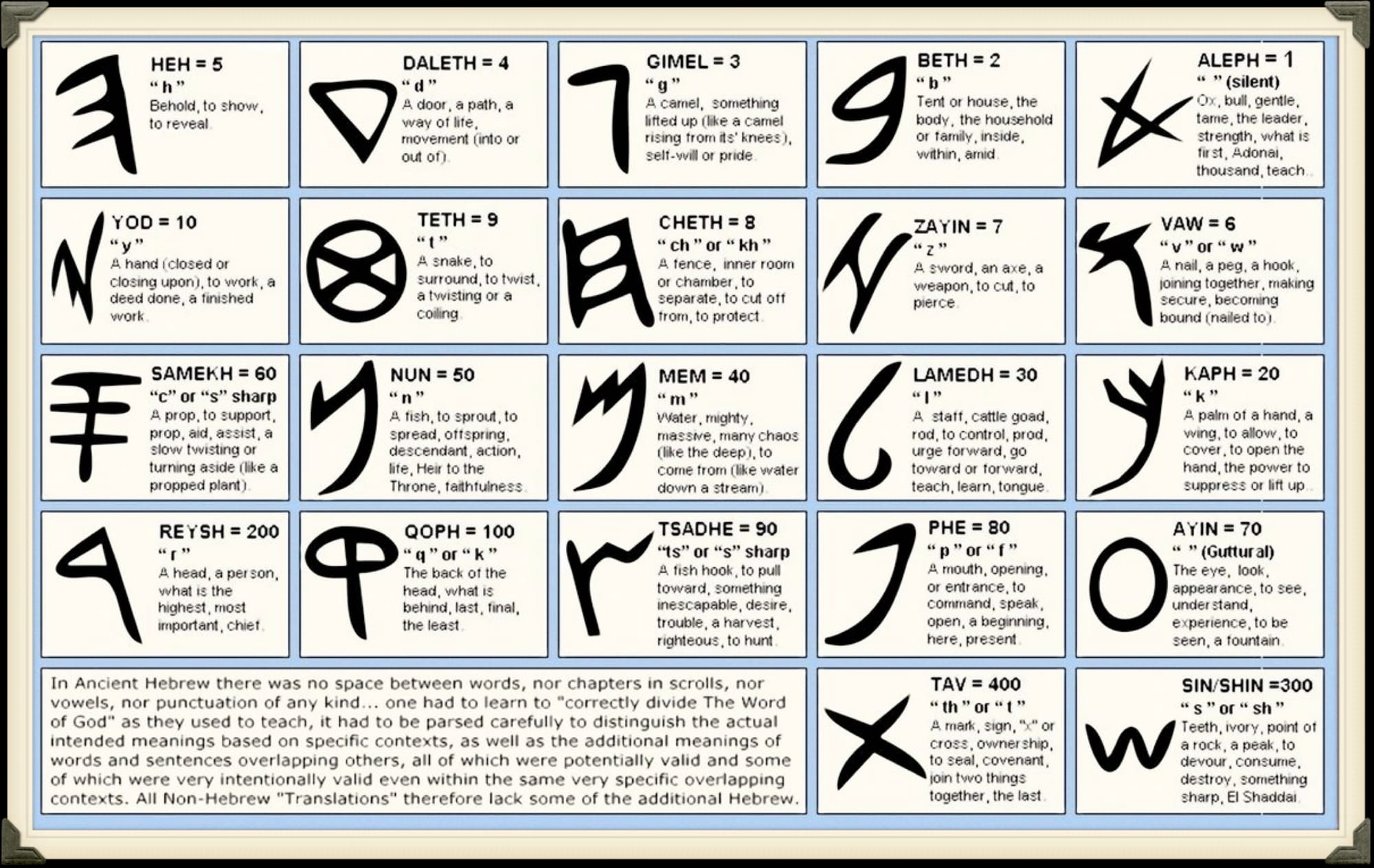
The mark he makes is literally the Taw (or Tav) which is the last letter in the Hebrew alphabet. In the ancient Hebrew cursive it was written like an X or cross.
For those who do not carry this mark, again we see Deuteronomy being fulfilled:
“And it will happen that if you indeed forget Yahweh your God and you go after other gods and you serve them and you bow down before them, I warn you today that you will surely perish. As with the nations that Yahweh is destroying before you, so you shall perish because you would not obey the voice of Yahweh your God.”
—Deuteronomy 8.19–20
God has to take Ezekiel by the hand to reveal in no uncertain terms the extent of the sinfulness of his people, so that Zeke comprehends the fact that his own nation is more rotten to the core than he had ever imagined.
Voce Dei
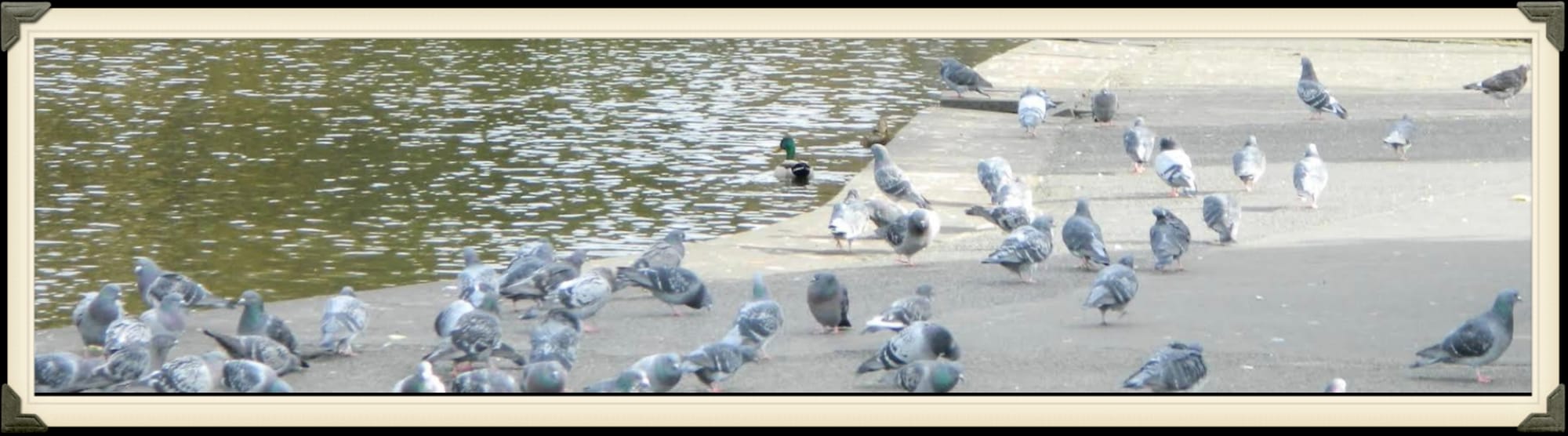
One day when Graham was 10, our family was walking in a city past a flock of pigeons. They flew off en masse and made a tremendous sound over our heads — so much so that it scared Graham. If a group of harmless pigeons can do that, I can only imagine how Ezekiel must have felt as Yahweh's angelic creatures are on the move:
“The moving wings of the cherubim sounded like the voice of God Almighty”
—Ezekiel 10.5
“As they flew, their wings sounded to me like waves crashing against the shore or like the voice of the Almighty.”
—Ezekiel 1.24
Yahweh = Sanctuary
Not only are God's creatures on the move, but he himself will be on the move. By the time we come to chapter 11 of Ezekiel, Yahweh is leaving the Temple, Mount Zion, and the Holy City. But he says:
“I will be a sanctuary.” —Ezekiel 11.16
Yahweh can depart the Temple because the Temple never contained Him.
Even Solomon who built the Temple knew as much when he prayed:
“If they sin against you — for there is no one who does not sin — and you are angry with them and give them to an enemy, so that they are carried away captive to the land of the enemy, far off or near . . . then hear in heaven your dwelling place their prayer and their plea”
—1 Kings 8.46 & 49
Sadly, by the time Jesus comes on the scene, Israel had forgotten the wisdom of Solomon and the lessons of Ezekiel. And so, after Jesus has to clear the Temple, he must challenge the religious leaders with a concept they cannot get their minds around: That he is the sanctuary.
“ ‘Destroy this temple, and in three days I will raise it up.’ . . . he was speaking about the temple of his body.”
—John 2.19 & 21
That Yahweh offers to be a special sanctuary is a special concession for his special people.
Induction
Just because there’s:
- a special people
- chosen especially by God
- who enjoy special blessings
- in a special land
- with a special city
- with a special gathering place
- with special leaders
- who wear special clothes
- who do special rituals
- who say special words
— all that Form doesn’t mean the leaders or their people are actually glorifying God.
We need to be careful how we think about being special. Right? When we say, “Oh, he’s special!” 😄 — that’s not necessarily a compliment, is it? And that’s really at the heart of what God means by our being “chosen people”.
It’s more like: “Look at these stiff-necked, hard-hearted people who fail in book after book, chapter after chapter, verse after verse. They’re so special, the only way my glory can shine through them is if I die to self in order to extend to them yet again mercy and grace, reconciliation and resurrection." And thus the chosen people become the unwitting poster children of God’s longsuffering devotion: If he can do that for the weakest of humanity, we might have a chance too.
And the Good News according to Ezekiel is that of the rest of the biblical library. Consider:
- When Abraham needs to leave home and go into exile in Canaanland, God goes with him.
- When Jacob needs to leave home to go into exile to Haran (on the border between Turkey and Syria), God goes with him.
- When Joseph is exiled into Egypt, God goes with him.
- When Jacob leaves the Promised Land to go into exile in Egypt, God goes with him.
- When the Hebrew slaves are in exile in the Sinai desert, God goes with them.
- When Joseph & Mary & baby Jesus are exiled from Bethlehem to Egypt, God goes with them.
- When adult Jesus goes through Samaria, and Syria, and Jordan, God goes with him.
- When Paul goes throughout the Mediterranean world as he pursues Jesus’s Great Commission, God goes with him.
The God of the Universe repeatedly flips the tables on the pagan notion that He — and his power and his favor — is limited to one place or even one people. Such was the presumption of the Tower of Babel, of Egypt, of Babylon. And such was the presumption of Israel and Jerusalem.
Exiling God
Next week with Bishop Chris here, we’ll take a break from Ezekiel and our assigned Old Testament lesson will take us back about 400 years before the time of Ezekiel to the time when a young shepherd boy is anointed in Bethlehem.
Whenever we get to the latter part of the David epic where his own son usurps the throne, and David flees Jerusalem: Have you ever felt like David gives in too easily? Like, shouldn’t the powerful king stand his ground and quell the uprising? Yet, he doesn’t do that. It says:
“Then David said to all his servants who were with him at Jerusalem, ‘Arise, and let us flee.’ . . . The king crossed the brook Kidron . . . David went up the ascent of the Mount of Olives, weeping.”
—2nd Samuel chapter 15
Today’s reading of Ezekiel chapters 8-11 is the story of Yahweh being driven away from his special abode by his chosen people.
“drive me from my Temple”
—Ezekiel 8.6
Yahweh doesn’t sound much like an almighty god here: Him, allowing his people to go astray and evict him. But such is God the Father. And such is God the Son:
“Jesus went out with his disciples across the brook Kidron.”
—John 18.1
“. . . to the Mount of Olives, and the disciples followed him . . . And being in agony he prayed more earnestly; and his sweat became like great drops of blood falling down to the ground.”
—Luke chapter 22.39 & 44
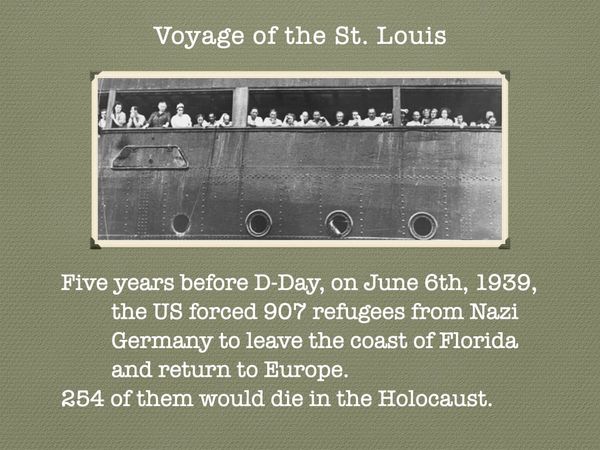
We exile God. We force him into refugee status. That’s what we’re good at — because we are unwilling to rest in him and allow him to fully rest in us. And so: His merciful grace is really amazing — that he goes with us.
Let us pray: