The 3Fs of "What to Make of a Life"
Another self-actualization book? Yes, that’s what Jim Collins’s 10-year research project employing 28 research assistants has produced.

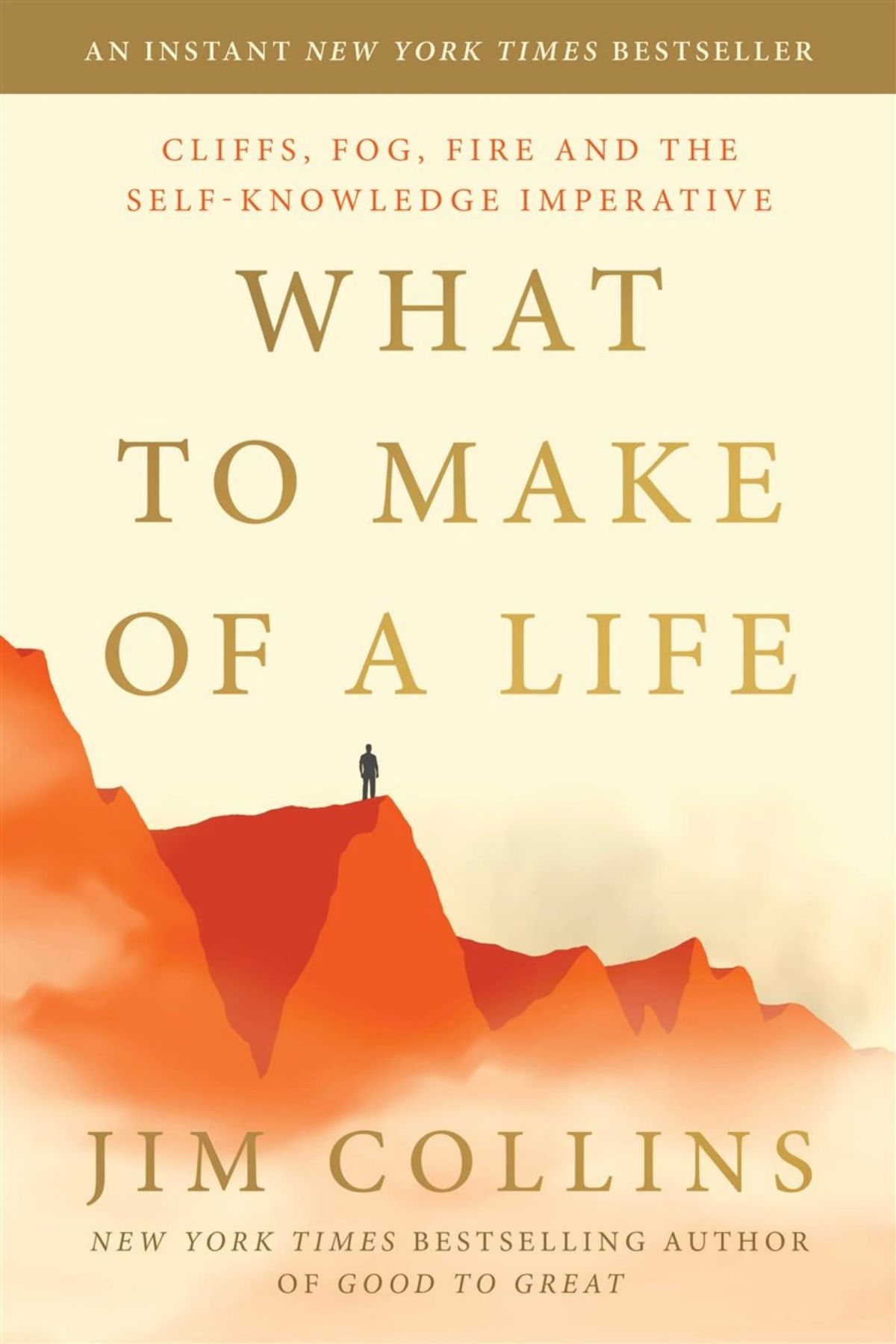
Another self-actualization book? Yes, that’s what Jim Collins’s 10-year research project employing 28 research assistants has produced. What to Make of a Life: Cliffs, Fog, Fire and the Self-Knowledge Imperative (HarperCollins 2026) is based on the lives of 34 unrandomly selected successful people.
Here I’ll start with what’s good about the book, and then focus on its fatal blindspot.
What Works
As an anthology of biographical sketches, it works — who’s not fascinated by a good yarn about impressive people. The study is also a gracious critique of Arthur Brooks’s inadvertent emphasis on early-life success in his From Strength to Strength: Finding Success, Happiness, and Deep Purpose in the Second Half of Life (Penguin 2022) — although Collins repeats his charge at least three times through his book. Likewise some of Collins’s profiles, such as of Katharine Graham and Alan Page, are helpful pushback on employers who pigeon-hole applicants and assume everyone’s life must follow a predictable path. Perhaps the most beautiful vignette in the book — and certainly the most relevant for American readers in the 2020s — is when the author rehearses the friendship between President Gerald Ford (Republican) and President Jimmy Carter (Democrat).
Fatal Flaw
The problem with What to Make of a Life is when Collins quickly turns to normative moralizing. In the first of three parts of the book, he distills a rule of life from the examples of his successful subjects. His rule consists of three supposed secrets that I would summarize as his 3 Fs:
- Find what you’re naturally driven to do.
- Fund it.
- Focus on it.
Collins’s innocuous insights are sold to us as morally neutral universal truths. This is how the world ticks. Follow this 3F pattern and you too can fulfill your dreams.
The 3Fs allow room for only one love and that is the love of Self, which the author adroitly relabels as discerning one’s “internal encoding”. In order for one’s encoding to shine brightly, one needs to be “in frame,” that is, the right context. This is Collins’s way of preaching the modern gospel of “You owe the world your best self because there is only one you.” Such a siren song echoes nothing more nor less than the serpent’s ancient temptation to Eve and Adam.
By the middle of his 400-page study, the 68-year old leadership guru has come to a profound epiphany: Everyone’s life is full of involuntary transitions and adversity. These cliffs, as he calls them, tempt us into doubts and disorientation or fog. He chalks up all of life’s cliffs, as well as serendipity, to the luck of “the roulette wheel of life” which must be capitalized upon by the 3Fs.
Collins attempts to amend his selfish 3Fs by closing out his sermon with an exhortation to “choose responsibility.” This means seeking a purpose that transcends the Self. Such contribution to the common good, naturally however, must conform to the confines of one’s encoding. So, chosen causes are really opportunities and justifications to spotlight one’s encoding. After all: Manifesting one’s encoding is the one big idea of his stump speech.
Well-intended as Collins’s project may be, it is alchemy. His potion would produce narcissistic caesars as well as the altruistic characters cherrypicked for his book. Narcissists are the world’s experts at identifying their own strengths, resourcing them, and tenaciously advancing them (the 3Fs). Narcissists may cycle in and out of a series of cliffs and fogs, but their heightened survival instinct nearly always lands them “in frame”. And their predatory intuition makes them adept at playing ‘the protector’ in order to manipulate support from others. Why omit such obvious subjects from What to Make of a Life?
Such obvious candidates would show up the 3Fs for the godless formula that it is — godless except for both the idolization of the people who have managed to shape their lives according to their desires, and their own implicit idolization of their encoding. The encoding is the god of one’s life. All else must serve the encoding. To the extent one has manifested their encoding, one has succeeded. To the extent one fails to achieve their encoding, one’s life has been a failure.
There is no love of God or neighbor required here, despite the author peppering some of his biographical sketches with feel-good moments. There is no need for self-sacrificial devotion — in the language of the Hebrew Bible: hesed, and in the language of the Greek New Testament: agape — unless it is in service to the encoding. There is no humble descent down the ladder of self-denial unless it is for the sake of the encoding. There is no place for Jesus’s prayer on Olivet to the Father — “not my will but yours be done” — because the encoding has predetermined the agenda.
The encoding must never be sacrificed on the altar of an alternative love. Love your encoding. Nurture it. Protect it. Find it, fund it, focus on it.
In other words: Be true to yourself. True patriotism belongs to the Self. Everything gets sacrificed on the altar to the Self.
The publisher could have saved a lot of money and time by telling Collins to simply write about the one man who has best exemplified his profile of success for the 21st century: President Donald Trump is a purer posterchild for Collins’s axioms than any of the subjects in his book. Who better than Trump has mastered the 3Fs, cycled in and out of a series of cliffs and fogs, and (at least until the 2026 midterm) repeatedly convinced voters that he had embraced a transcendent responsibility? Considering Trump’s personification of the principles would have laid bare the futility of this project.
But: There’s little profit to be made without trying hard to hide being-human-without-the-love-of-God-and-neighbor.